

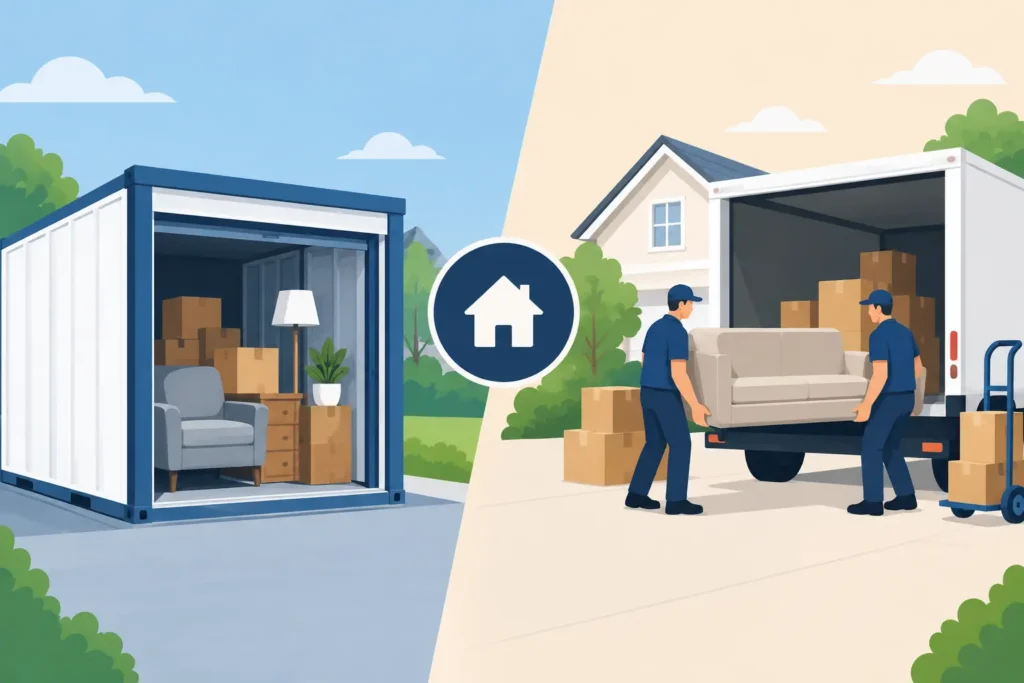
A move from a third-floor walk-up in Lakeview is not the same as a move from a Northbrook home with a long driveway. That is why the portable storage versus movers decision should start with your property, timeline, and how much physical work you are prepared to take on. The lowest-looking price is not always the most affordable choice once labor, time off work, parking, damage risk, and storage needs are counted.
Portable storage gives you a container and more control over the pace. Professional movers give you a trained crew, a truck, and a coordinated plan from packing through unloading. Both can work well. The better option depends on what your move demands.
Portable Storage Versus Movers: The Core Difference
With portable storage, a company drops a weather-resistant container at your home, driveway, or approved curbside location. You load it, usually over several days. The container may stay on-site, move to a storage facility, or be transported to your new address for you to unload.
With a moving company, a professional crew arrives at an agreed time to load your belongings into a moving truck, transport them, and unload at the destination. You can also add packing, unpacking, furniture disassembly, storage, and moving-bin rental services when you need them.
The difference is not simply DIY versus full-service. It is control over time versus support on moving day. Portable storage can ease a complicated timeline, while movers can remove the most demanding parts of the job.
When Portable Storage Makes Sense
Portable storage is often a practical choice when your move has a gap between homes. Maybe your closing date changed, your lease ends before your new place is ready, or you are renovating before moving in. A container can hold your belongings during that in-between period without requiring you to unload into a separate storage unit and load again later.
It can also suit people who want to sort gradually. If you have several weekends to pack, donate items, and load room by room, the slower pace may feel less stressful than doing everything in one day. This can be helpful for a smaller household that has flexible time and is comfortable handling boxes and furniture.
However, the container itself needs a legal, workable place to sit. Chicago streets, narrow alleys, condo rules, apartment loading zones, and suburban association requirements can all limit where a portable unit can be placed. Some locations require permits or management approval. Before booking, confirm the container dimensions, delivery access, placement rules, and how long it may remain there.
The Work Still Belongs to You
A portable container does not eliminate the hard work of moving. You still need to pack safely, protect furniture, carry heavy items, load the container strategically, and secure everything for transport. Poor loading can lead to shifting, crushed boxes, scratched furniture, or unused space that makes the container feel too small.
You may also need to arrange help for bulky pieces such as sectionals, dressers, appliances, exercise equipment, and large desks. A few friends can help, but their availability may be limited, and an injury or damaged stairwell can quickly turn a savings plan into an expensive problem.
When Professional Movers Are the Better Fit
Professional movers are usually the stronger choice when timing is tight, access is difficult, or the move includes heavy and fragile belongings. A trained crew can protect floors and doorways, wrap furniture, manage stairs, handle elevators, and load a truck efficiently. For Chicago apartments and busy buildings, that coordination matters.
A full-service move is especially useful if you are balancing work, family, a lease deadline, or a business opening date. Instead of spending nights assembling boxes and searching for help, you can choose the level of service you need. Some customers pack their own boxes and hire movers for loading and transport. Others use professional packing and unpacking for a more complete, stress-free experience.
For long-distance moves, experienced movers can also provide a clearer transport plan and a single point of contact. That is valuable when your belongings need to arrive safely across state lines and you cannot be at both homes for every handoff.
Protection, Accountability, and Experience
Moving crews handle fragile, oversized, and awkward items every day. They know how to wrap mirrors, protect wood furniture, secure mattresses, and move appliances through tight spaces. Fully insured service and clear inventory procedures provide another layer of confidence that a self-loaded container may not offer.
This does not mean every move needs a full crew for every task. It means you should be realistic about what you are moving. A studio with lightweight furniture is very different from a four-bedroom home with a piano, antiques, a nursery, and a basement full of stored belongings.
Compare the Real Cost, Not Just the Starting Price
Portable storage often appears cheaper because the advertised rate may cover delivery and container use, not all the costs around the move. You may need packing supplies, moving blankets, tie-downs, hired loading help, permit fees, storage charges, fuel for personal trips, and extra rental days. If your move runs late, those daily or monthly extensions can add up.
Movers may have a higher upfront quote, but a tailored estimate can account for labor, truck size, travel time, packing, specialty items, stairs, elevators, and storage. That makes the expense easier to plan around. It also saves the hidden cost of lost work hours, multiple loading days, and last-minute favors.
Ask either provider what is included and what can change the final price. Be specific about your home size, origin and destination ZIP codes, move date, building access, flights of stairs, elevator reservations, and any items that need special handling. An accurate quote begins with accurate move details.
Timing and Access Can Decide the Move
If you need belongings loaded and removed within a short building-approved window, movers are often the safer route. Many Chicago buildings require elevator reservations, certificates of insurance, loading dock schedules, or strict move hours. A professional team is accustomed to working within those conditions.
Portable storage is more forgiving when your schedule is open, but delivery and pickup still require access. Low-hanging branches, tight driveways, street traffic, snow, parked cars, and construction can complicate placement. In winter, a container on an icy driveway can also make loading slower and less safe.
For an office move, professional movers usually offer more control over downtime. A crew can label, pack, transport, and set up workstations in a planned sequence, helping your team return to business faster. A portable container may work for archived files or staged renovations, but it rarely replaces a coordinated commercial relocation.
A Practical Way to Choose
Choose portable storage if you have a secure place for the container, plenty of time to load, a flexible move date, and reliable help for the physical work. It is often useful for renovations, delayed closings, and gradual decluttering.
Choose movers if your move involves stairs, elevators, narrow access, valuable furniture, heavy items, a firm deadline, or a household that cannot spare several days of labor. It is also the better fit when you want one trusted team to manage packing, transport, storage, and setup.
A hybrid plan can be the best answer. You might use storage for items you will not need right away, then hire movers for the main household move. Chicago Packers and Movers can build a customized plan around the parts you want handled professionally, rather than forcing you into an all-or-nothing service package.
Before you commit, walk through both homes and picture the actual move day: where the truck or container will sit, who will carry the heaviest pieces, when the elevator is available, and what happens if the weather changes. The option that protects your time, belongings, and peace of mind is the one worth choosing.