

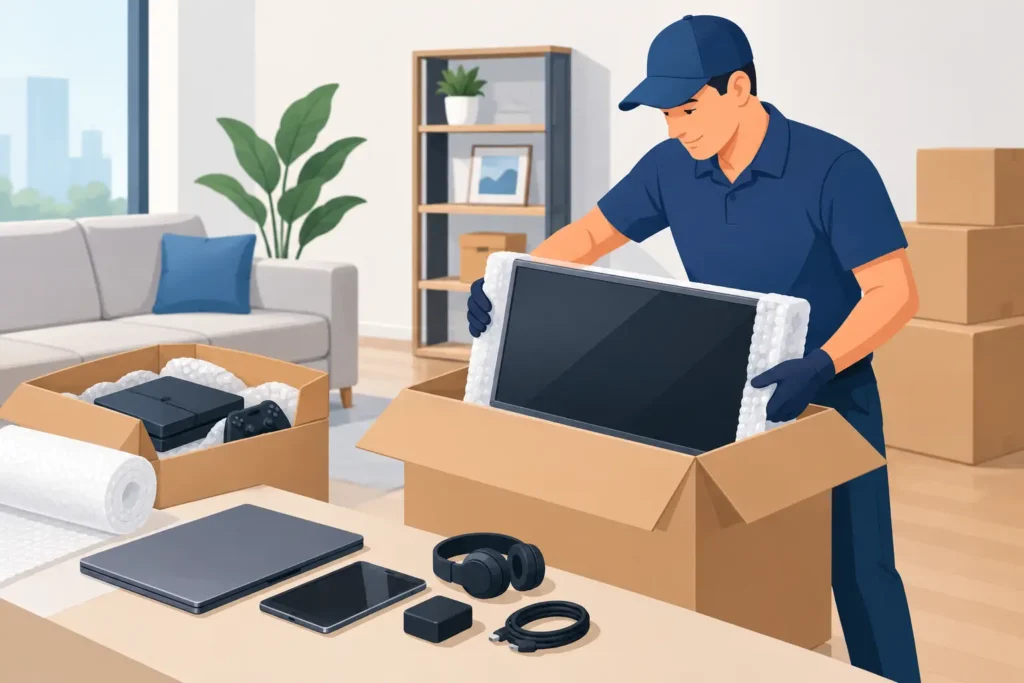
A television with a cracked screen, a desktop tower with loose internal parts, or a missing laptop charger can turn an otherwise successful move into an expensive headache. So, can movers pack electronics? In most cases, yes. Professional packers can safely prepare many household and office electronics for transport when the service is included in your move plan. The right approach depends on the item, its value, its condition, and whether it needs specialized disconnection or crating.
For Chicago households and businesses, professional packing brings more than boxes and tape. It brings an organized process designed to protect the equipment you rely on, keep move day moving, and reduce the chance of damage caused by rushed DIY packing.
Can Movers Pack Electronics Safely?
Trained movers can pack common electronics such as TVs, monitors, computers, speakers, gaming systems, printers, tablets, small appliances, and office equipment. They use appropriately sized cartons, protective wrap, cushioning, and careful loading methods to limit movement during transport.
Safety starts with matching the packing method to the item. A flat-screen TV should not be treated like a lamp or a box of books. It needs a TV carton or other strong, properly sized protection, corner guards, and secure padding. A desktop computer needs its cables removed, internal components stabilized when necessary, and enough cushioning that it cannot shift inside the box.
Professional packing is especially useful when you have several devices spread across a home. Instead of trying to find the right box at the last minute, label every cable, protect each device, and still pack the kitchen, you can have a trained crew manage the detailed work while you focus on the parts of the move only you can handle.
That said, not every electronic item should be packed the same way or transported by a moving crew. Small, high-value, or highly personal devices often belong with you.
What Electronics Can Professional Movers Pack?
Most standard home and office equipment can be included in a full or partial packing service. This may include televisions and sound systems, desktop computers and monitors, printers and scanners, gaming consoles, kitchen countertop appliances, lamps, and business workstations.
For an office relocation, professional packing can also help organize monitors, docking stations, desk phones, cables, conference-room equipment, and non-sensitive peripherals. This keeps work areas organized during disassembly and makes setup at the new location faster. For a business, that can mean less disruption and a more controlled return to operations.
Large or delicate items may require extra planning. A home theater system, server equipment, oversized printer, commercial copier, arcade machine, or medical device may need specialized handling, manufacturer-approved service, or custom crating. Tell your moving company about these items while requesting an estimate, not when the crew arrives. A customized plan gives the team time to bring the right materials, schedule the right crew, and explain any service limitations clearly.
Items You Should Usually Keep With You
Certain electronics are safer in your personal vehicle or carry-on luggage, even if movers are packing the rest of your home. These include laptops, phones, external hard drives, cameras, wearable devices, and devices containing irreplaceable records or sensitive personal information.
The reason is not that professional movers cannot handle them carefully. It is that these items are compact, easy to keep close, and often essential immediately after arrival. If your laptop contains work files, your phone is your only way to communicate, or an external drive holds family photos, having it with you provides extra control.
Avoid packing loose lithium batteries with general household goods. Remove batteries when the manufacturer recommends it, protect battery terminals if applicable, and ask about any restrictions before move day. Damaged or swollen batteries should be handled according to local safety guidance rather than placed in a moving box.
What to Do Before Movers Pack Your Electronics
A professional crew handles the physical packing, but a little preparation from you makes the process more secure. Back up computers, tablets, phones, and external drives before the move. This protects your information if a device is lost, damaged, or fails for reasons unrelated to transportation.
Take photos of cable connections before unplugging anything complex. A quick photo of the back of a television, router, desktop setup, or entertainment receiver can save time when you are reconnecting it. You can also place cables, remotes, mounting hardware, and power cords in labeled bags. Keep each bag with its matching device whenever possible.
If an item has a disc inside, remove it. Empty paper trays from printers, secure scanner lids, and remove loose accessories. For refrigerators, freezers, and other appliances with electronic controls, follow the manufacturer’s preparation instructions and make sure the unit is fully dry before packing.
You should also log out of devices if they will be handled by multiple people, protect confidential files, and remove sensitive paperwork from printer trays or scanner feeders. Businesses should coordinate with their IT team before moving network equipment, servers, data storage, and employee workstations. A moving crew can pack and transport equipment, but the business remains responsible for data security, system shutdown, and technical reconnection unless a separate IT service has been arranged.
How Movers Protect TVs, Computers, and Other Devices
The best protection is a combination of quality materials and disciplined handling. Electronics are typically wrapped to prevent surface scratches, cushioned to absorb bumps, and packed in sturdy boxes with minimal empty space. Heavy items are not placed on top of fragile devices, and boxes are labeled so crews know how to load and unload them.
Original manufacturer packaging is helpful if you still have it, particularly for TVs, monitors, and specialty equipment. It was designed for that product’s shape and vulnerable points. But it is not required. Professional packers can use purpose-built cartons and protective materials when original boxes are gone.
Loading matters just as much as packing. Electronics should be secured in the truck so they do not slide or tip while driving through Chicago traffic, tight neighborhood streets, or longer interstate routes. An experienced crew plans the truck layout around weight, stability, and access at delivery.
Insurance and Declared Value: Ask Before Moving Day
No packing method can remove every risk. Ask your mover how coverage works for electronics, including whether coverage differs for items packed by the customer versus items packed by the moving company. Be honest about unusually valuable equipment and request a clear explanation of valuation options before you book.
If an item is exceptionally rare, expensive, or difficult to replace, it may need specialty coverage or transportation outside the standard moving process. Clear communication protects everyone and prevents unpleasant surprises after the move.
When Full-Service Packing Is Worth It
Full-service packing is often a smart choice when you are moving a larger home, relocating on a tight schedule, managing children or work obligations, or preparing an office for a fast transition. It is also valuable when you have multiple televisions, computer setups, or fragile electronics that need more attention than a basic box-and-tape approach.
Partial packing can be a more affordable middle ground. You pack clothing, books, and everyday items, while professional packers handle electronics, artwork, dishes, and other fragile belongings. This gives you targeted protection without paying for packing help in every room.
Chicago Packers and Movers can build a customized plan around the services you need, from careful electronics packing to loading, transport, storage, unpacking, and setup support. Sharing your home size, move date, access details, and electronics list upfront helps create a more accurate quote and a smoother schedule.
A Better Move Starts With a Clear Electronics Plan
Do not wait until moving morning to decide what happens to the TV, computer, or office equipment. Set aside personal devices, back up important data, identify specialty items, and tell your movers what needs extra care. With a clear plan and professional packing support where it makes sense, your electronics can arrive protected, organized, and ready for the next chapter.