

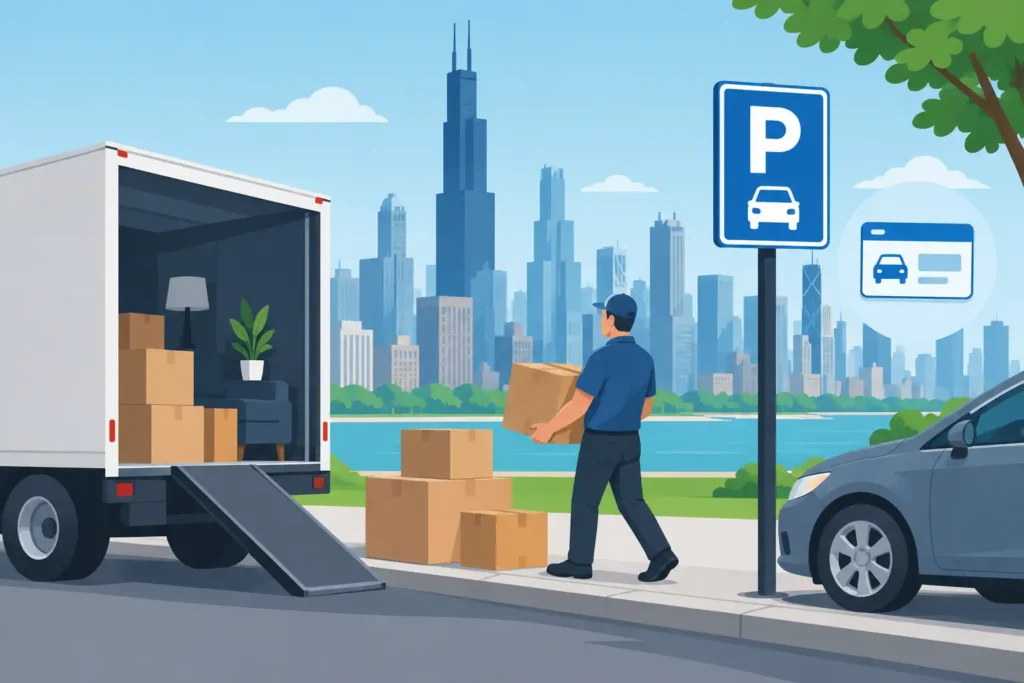
A moving truck double-parked on a narrow Chicago street can turn a carefully planned move into a race against traffic, tickets, and frustrated neighbors. This Chicago parking permit moving guide helps you plan for legal curb access before the crew arrives, so loading and unloading stay fast, safe, and controlled.
Chicago Parking Permit Moving Guide: Start With the Curb
Parking rules in Chicago are not one-size-fits-all. A quiet residential block in Ravenswood can have different restrictions from a high-rise street in River North, a permit-parking zone in Logan Square, or a busy commercial corridor in Evanston. Before booking a truck or confirming your move time, look closely at both your old and new addresses.
Start by checking the signs on each side of the street. Look for residential permit parking rules, street-cleaning schedules, rush-hour restrictions, loading zones, metered parking, construction notices, and posted no-parking periods. Also note one-way streets, alley access, bike lanes, elevated tracks, and buildings with loading docks. These details affect where a moving truck can stop and how much time the crew has to work.
A residential parking permit, whether held by you or a neighbor, is not the same thing as a permit that reserves a space for a moving truck. In many cases, you may need temporary no-parking signs, a moving-related curb permit, building approval, or a combination of these steps. Requirements can vary by location and can change, so confirm the current process with the City of Chicago and, when applicable, your local ward office or property manager.
Know Which Permission You Actually Need
The phrase “parking permit” covers several different situations. Understanding the difference keeps you from applying for the wrong thing or assuming a permit gives you more access than it does.
A temporary no-parking arrangement is usually the best option when you need a clear stretch of curb for a truck on a residential street. It is designed to create working room, not simply to give the driver a place to wait. The city or ward office may have rules about the application process, sign placement, dates, hours, and how much curb space can be reserved.
A loading zone is different. Some commercial and downtown areas have designated loading spaces, but those spaces often have time limits, vehicle restrictions, or hours reserved for deliveries. A moving truck may still need authorization, and it should never assume that a loading zone is available just because the curb is painted or marked.
For apartment and condominium moves, the building may be the main source of restrictions. Many properties require a move reservation, a certificate of insurance from the moving company, elevator scheduling, protective padding, and a refundable deposit. A building-approved elevator does not reserve the street outside, so treat curb access and building access as two separate jobs.
Apply Early, Especially for Weekend Moves
Do not leave curb planning until the week of your move. Give yourself at least two to three weeks when possible, and allow more time if your move falls near a holiday weekend, major event, construction season, or the end and beginning of a month. Chicago move dates often cluster around lease turnover periods, making permits, elevators, and loading areas harder to secure.
When you contact the appropriate city office, ward office, or building team, have the basic facts ready: both addresses, your move date, the requested time window, the approximate truck size, and how much curb space you need. Share whether you are moving from a single-family home, a walk-up, a high-rise, or an office. A 26-foot truck serving a three-bedroom home needs a different setup than a small truck handling a studio apartment.
Ask what proof is required and whether signs must be posted in advance. Do not skip that detail. Even when a temporary restriction is approved, improperly posted or missing signs can lead to conflict on move day. Take a clear photo of the signs after they are placed, including the date, time, address, and restriction wording if visible.
Measure the Street, Not Just the Truck
A legal permit does not solve a physical access problem. Before moving day, walk or drive the route from the nearest main road to your building. Look for low tree branches, tight turns, parked cars, narrow alleys, overhead wires, and roadwork. If the truck cannot safely reach the entrance, the crew may have to carry belongings a much longer distance, which adds time and labor.
Think through the full loading path. At a house, that may mean the curb, sidewalk, front gate, stairs, and entryway. At an apartment, it may include a security desk, freight elevator, hallway turns, and a loading dock. Keep that path as clear as possible. Move planters, bins, patio furniture, loose rugs, and any items that could slow down the crew or create a trip hazard.
At the destination, check where unloading will happen. A truck may be able to park near your old home but not near your new one. This is common in dense neighborhoods, on streets with limited curb space, and at buildings with separate resident and service entrances.
Avoid Costly Chicago Parking Mistakes
The fastest move is not the one where the truck stops wherever there is an opening. It is the one that starts with a safe, legal plan. Never count on blocking an alley, driveway, fire hydrant, bus stop, crosswalk, bike lane, or accessible parking space. Do not rely on hazard lights as permission to double-park or stand in a restricted area.
Metered spaces, rush-hour lanes, street-cleaning routes, and construction zones can create problems even if they look open when you first visit. Check the signs again shortly before move day. Temporary construction notices and special event restrictions can appear after you have planned your route.
If you are moving during winter, build extra time into the plan. Snow, narrowed streets, and reduced curb visibility can make truck placement more difficult. In summer, festivals, parades, and neighborhood events can have the same effect. A flexible arrival window is useful, but it does not replace a reserved or confirmed curb plan.
Coordinate Your Movers, Building, and Neighbors
Once you know where the truck can park, share the details with your moving team before the scheduled date. Tell them the allowed time window, the exact side of the street, the closest entrance, elevator reservation time, and any loading dock instructions. Mention stairs, long carries, parking garages, and access codes as well.
It also helps to give neighbors a polite heads-up when your move requires temporary curb space or may briefly increase activity near their homes. You do not need to overexplain. A simple notice with the date and expected hours can prevent surprises and makes a busy block easier to manage.
For commercial moves, coordination matters even more. Offices, retail locations, and professional buildings may have delivery schedules, customer traffic, security requirements, and building-specific loading rules. Plan the move around your least disruptive operating hours when possible, and make sure decision-makers know exactly when the truck will arrive.
Move-Day Curbside Checklist
Before the truck pulls up, confirm four essentials: the approved parking or sign arrangement is in place, the building is ready to receive the crew, the loading path is clear, and your mover has the correct parking instructions. Keep your phone nearby in case the driver needs to confirm the street side or entrance.
If another vehicle is parked in an authorized moving space, do not create a confrontation. Document the situation, follow the instructions provided with your permit or posted signage, and contact the appropriate city or building representative if needed. Your moving crew can adjust when necessary, but early communication gives them the best chance to protect the schedule.
A dependable moving company should also help you think through the practical side of truck access. Chicago Packers and Movers can coordinate a customized move plan around your building rules, parking limitations, packing needs, and preferred schedule, helping you avoid the last-minute decisions that make moving day more stressful.
The goal is simple: when the truck arrives, the curb, entrance, and route inside should already be ready. A little permit planning gives your crew room to work carefully, keeps your belongings moving efficiently, and lets you start settling into your new Chicago space with far less pressure.