

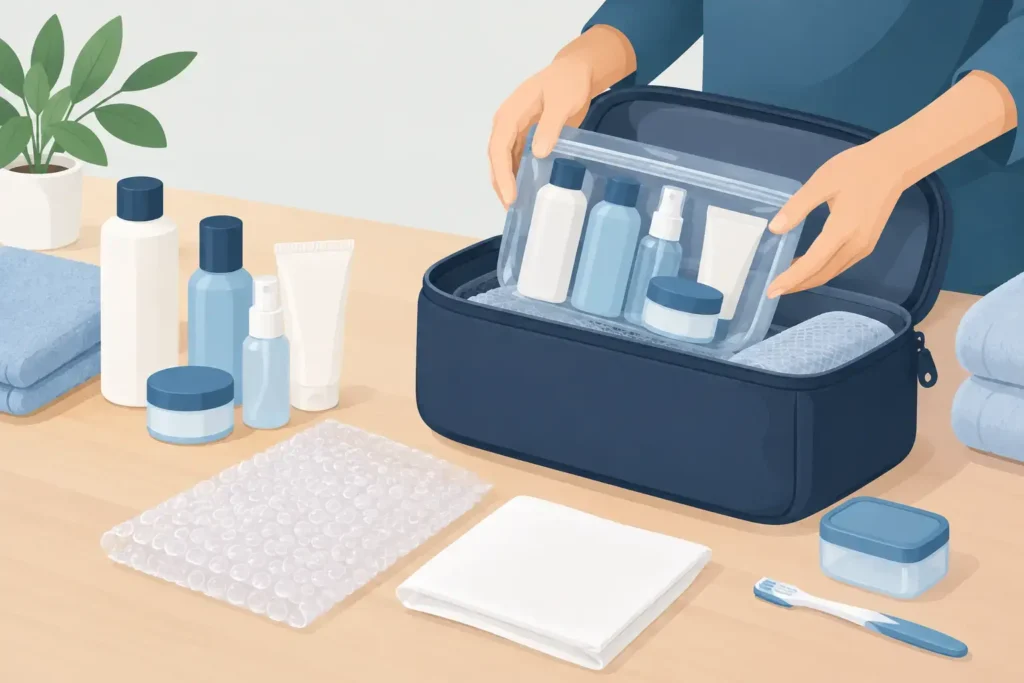
A bathroom may be one of the smallest rooms in your home, but it can create some of the biggest packing problems. Half-used shampoo bottles leak, glass containers crack, medications get misplaced, and the one item you need the first night ends up at the bottom of a box. Knowing how to pack bathroom items properly keeps your belongings protected and makes move-in day far less stressful.
The best approach is to sort first, pack by category, and keep daily essentials separate from the boxes going on the truck. Whether you are moving from a Chicago apartment, a family home, or a condo in the suburbs, a little organization protects your items and saves time when you are ready to unpack.
Start by Sorting What Is Worth Moving
Bathroom cabinets tend to collect expired prescriptions, dried-out makeup, nearly empty bottles, and products that have not been used in years. Moving these items costs space and adds clutter to your new home. Before packing, pull everything from medicine cabinets, drawers, shelves, and under-sink storage.
Throw away empty containers and products that are expired, discolored, or have changed in smell or texture. Check local disposal guidance before getting rid of prescription medications. Do not pour medications down the toilet or sink unless the label specifically says it is safe to do so.
This is also a good time to reduce duplicate items. You probably do not need to move three open bottles of body wash or a drawer full of hotel toiletries. Keep what you will realistically use, donate unopened personal-care products where accepted, and discard the rest responsibly.
How to Pack Bathroom Items That Can Leak
Liquids are the biggest risk in bathroom packing. Shampoo, conditioner, mouthwash, lotion, facial cleanser, nail polish remover, and cleaning products can leak from loosened caps during loading and transport. Even a small spill can soak towels, damage cardboard, and ruin other belongings in the same box.
Start by tightening every cap and pump. For bottles with flip tops, place a small piece of plastic wrap over the opening before closing the lid. Then put each bottle into its own resealable plastic bag. Group similar items in a larger bag or waterproof bin, but do not overfill it. If one bottle leaks, the mess stays contained.
Avoid packing large quantities of liquid if you are making a long-distance move. Heavy bottles add weight, and products can be affected by temperature changes in transit. It may make more sense to use up bulky, inexpensive products before the move and replace them after arrival.
Keep Cleaning Supplies Separate
Do not pack bathroom cleaners with toiletries, towels, or medications. Products containing bleach, ammonia, or strong chemicals should stay upright in a separate, clearly labeled box or plastic tote. Never mix chemicals together, even if the containers are sealed.
If you are hiring professional movers, ask ahead about any restricted household materials. Some products may need to be transported in your personal vehicle or disposed of before moving day. A trained moving team can help you plan around these items, but safe disposal is often the right choice for hazardous cleaners.
Protect Glass, Mirrors, and Fragile Containers
Glass perfume bottles, skincare jars, cosmetics, electric grooming tools, and countertop accessories need more protection than standard bottles. Wrap each glass item individually in packing paper or clean towels. Place wrapped pieces upright in a sturdy small box, filling empty spaces with crumpled paper so nothing shifts when the box is carried.
Small boxes are the safer choice for bathroom items. A large box filled with bottles, jars, and appliances becomes too heavy quickly and is harder to control on stairs or narrow apartment hallways. Label the box “Bathroom – Fragile” on more than one side so it is easy to identify during unloading.
For detachable mirrors, remove them from the wall if possible and wrap them with packing paper and moving pads. Large mirrors need specialized protection and should not be tucked loosely between boxes. If you have a delicate vanity mirror or a high-value item, professional packing can provide extra protection and insured handling.
Pack Towels and Linens as Built-In Cushioning
Bath towels, hand towels, washcloths, and shower curtains are useful packing materials, not just soft goods to put in a bag. Use clean towels to wrap hair dryers, curling irons, soap dishes, and other non-fragile accessories. They can also fill gaps in boxes containing sealed toiletries.
Make sure towels and shower curtains are completely dry before packing. Damp fabric can develop an unpleasant odor or mildew in a sealed box, especially if boxes sit in storage for several days. Wash items that need it, allow enough drying time, and fold them into medium boxes, reusable moving bins, or vacuum bags.
Leave out a few towels for moving day and the first night. You may need them for unexpected spills, cleaning the old space, or taking a shower before the rest of your boxes are unpacked.
Set Aside an Open-First Bathroom Kit
The bathroom essentials you use every day should not go on the moving truck with everything else. Pack an open-first bag, bin, or small box that travels with you. This is especially helpful if your move takes more than one day or you are arriving after a long drive.
Your kit should include the basics for each person in your household:
- Toothbrushes, toothpaste, soap, and deodorant
- Daily medications, glasses, contact lenses, and contact solution
- Toilet paper, hand soap, towels, and shower supplies
- A hairbrush, basic skincare, and any must-have personal-care items
- First-aid supplies, feminine hygiene products, and baby-care essentials if needed
Keep prescriptions, medical devices, and valuable items with you rather than in a packed moving box. This protects privacy and prevents a stressful search if your boxes are delayed or placed in storage.
Prepare Appliances and Electrical Items Correctly
Hair dryers, electric shavers, curling irons, straighteners, and water flossers should be unplugged, cleaned, and fully cooled before packing. Empty any water reservoirs and let them air-dry. Coil cords loosely and secure them with a twist tie or rubber band so they do not tangle or strain the connection point.
Use the original box if you still have it. If not, wrap each appliance in paper, a towel, or bubble wrap and place it in a small box. Do not pack hot tools immediately after use. A rushed packing job can damage the appliance, burn packing materials, or create a safety issue.
Battery-powered devices should be switched off. Remove loose batteries when practical and pack them according to the manufacturer’s directions. Keep chargers with their matching devices, using a label or small bag to avoid sorting through a tangled box later.
Label Boxes for a Faster Setup
Clear labels make unpacking faster for you and safer for your movers. Instead of writing only “Bathroom,” include the room and contents, such as “Primary Bathroom – Toiletries,” “Hall Bath – Towels,” or “Bathroom – Fragile Glass.” Mark boxes that must stay upright with arrows and a note such as “Liquids – Keep Upright.”
If you have more than one bathroom, use different colored tape or a simple numbering system. This helps movers place boxes in the correct room immediately, which matters when you are trying to get your home functional on the first day.
For Chicago moves, remember that weather can complicate loading and unloading. Rain, snow, or slush can make poorly sealed boxes vulnerable. Sturdy boxes, sealed bags for liquids, and reusable plastic moving bins offer added protection when conditions are less than ideal.
Know When Professional Packing Makes Sense
Packing a bathroom yourself is manageable when you have time to sort, wrap, and label each item carefully. But a busy family move, an office relocation with employee amenities, or a tight move-out deadline can make professional help worthwhile. Packing specialists can bring the right materials, protect fragile items, and organize boxes for efficient loading.
Chicago Packers and Movers offers customized packing support for customers who want a trusted team to handle part or all of the process. You can choose help for fragile items and high-risk areas, or arrange full-service packing that keeps your move organized from the first box to the final setup.
Before you close the last bathroom box, take one final look under the sink, behind the toilet, inside the shower, and in every medicine cabinet. Keeping essentials close and packing the rest with care means your new bathroom can feel usable from the first night, not days after the move.